Showing posts with label details. Show all posts

Thursday, 14 June 2018

The Society of the Spectrecle


(Nieuwe Binnenweg except if you were super-dimensional and could walk from and to both ends of the street at the same time.)

When I was about 14, we went on a school trip to the city of York in northeast England. One of the things we did was participating in a Ghost Tour. The curious activity consisted of a guide leading us (a group of maybe 30 kids) through the historical streets of  York city centre, while giving us several accounts of paranormal haunting that were attached to storiful locations along the route. The specific mental image is fuzzy by now, but I am 80% certain he had a top-hat and a cane. The experience was coloured with a kooky(-cutter) halloween charm, and I think back to it fondly. I guess it was my first-ever exposure to a cliché form or any form of psychogeography. The notion that places can be populated by stories, which is to say space can be filled with people and events of the (possible) past, came not as revelation but more as reminder. Of course that's true, that much of human reality is just stories. When I was a slightly older teenager I remember explaining to a friend this theory of how ghosts are just the universe's way of recording human beings' interactions with the universe itself. The guy was not convinced but I was.

I do remember several stories from York. This is impressive because I don't even remember many things I've done myself from that relatively distant time. There was a loyal dog trapped in cement in the church's groundwork, barking still at the exact same hour every day, trying to alert his owner of certain danger (serving also as a grimmer version of the church bells). There was the ghosts of an entire Roman legion marching through the houses and cafés , heading toward their original destination but stuck in the timeless action of ghostly mobility. There were the small feeble touches of starved children from times of urban famine, tiny fingers from children's heights reaching for the hands of passer-bys through all eternity, asking for food but are never fulfilled. There was...

Recently I have returned to the earlier habit and hobby of aimlessly walking in Rotterdam (at this point I feel pretentious to call it "flaneren" or "dérive"). A new area of attention is how the streets are filled with the stories of my own lived experience and interactions with others in this city year after year. In a sense these are ghosts of my own making. Over the years I have taken some photos and videos of these experiences in urban space. It wouldn't be such a stretch to geotag these media artifacts with locational information and place them on a map-interface. It would be like a google streetview merged with my own memories, a personalised ghostropolis.

We walked down Nieuwe Binnenweg as it was made pedestrian-only on King's Day, and I stupidly said that the guys in great local bands are starting to be younger than me now. Or I walked to a party in heavy rain to see somebody because I was dumb (still am) and my shoes were super wet (Why did I walk from Blaak to Rotterdam Noord in the rain? Wasn't there a tram?). Or probably the last time I played music in the city on the side of the small bridge on Hoogstraat, when some guy asked me to teach him how to play the guitar, and I ended up really giving him a few lessons, even when I was hardly qualified (but in punk if you know how to play 2 chords you can teach somebody who only knows 1 chord. This is the only way we will get by). And this and that.

More recent and intense is a piece of urban memory that is, in this line of thinking, ghost-on-ghost action. We played Pokemon Go around Halloween time and there was a special in-game event where the game space is saturated with ghost-type Pokemons such as Gengar and Duskull. This is, I think, the closest we got to combining ghost-hunting with location-based mobile technology. We spent many evenings searching for pokemons in Rotterdam West. It was great fun and very precious. I haven't played much Pokemon Go since. In due time we will play again, but maybe not in Rotterdam unfortunately.  The recent-past versions of us chasing ghosts here are ghosts themselves.

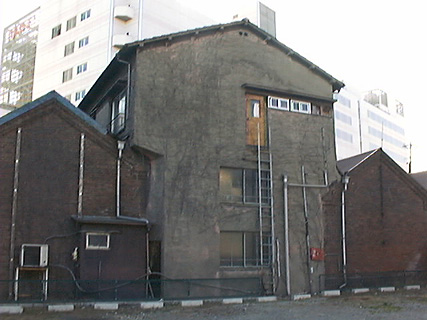
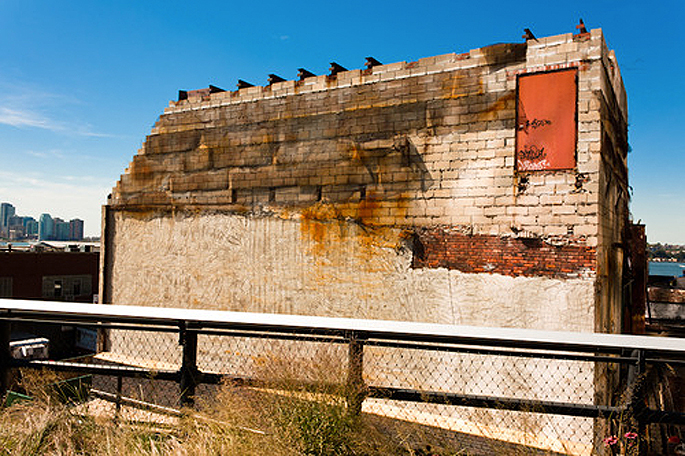
(Here's something I saw on Gouvernestraat. First I thought the most ghostly item in this artwork is the white rectangle at the bottom corner, having a strong presence by means of absence.)


(However as I got closer I reliased that the tree wasn't graffiti, it was actually dead. Maybe the whole situation wasn't planned to look like this at all.  The wall-climbing plant could've died naturally. The story of death and decay only comes alive in the process of death and decay. We can say ghosts are stories that tell themselves.)


--
These ideas may be trite and derivative. As you like to say, with the charismatic confidence of a cult leader receiving compliments, "tell me something new". You also said, of great ideas, something like "not many of them materialise (into successful products or successful businesses)". Indeed, one time I participated in a project in which we came up with a location based augmented-reality ghost-hunting game, but ultimately it didn't materialise. For this project I wrote some characters one could encounter in the AR environment. Some memorable ones are an old pagan god made of an infinite number of hissing and writhing snakes ("Yessss....touch the earth so we may feel your sssskin...") and a (literally) fallen angel who only exists in the sounds of broken wings, and is eager to offer the player knowledge which whilst true may cause him/her great harm.

At the time I didn't think of it like this, but of course that was the first psychogeography project I was involved in the making of.  Maybe that or the first ideas for this blog. It was an incubatory period for my urban imagination. In the present moment I can entertain the narrative that the two projects have come to converge in some way. The version of me which is created in the urban sensibility of GIR can be found in Rotterdam as a ghost, not unlike a loyal dog trapped in concrete eternal (isn't the concrete material ideal for horror stories involving death-by-building-construction?), or a fictional ancient god (should any god be considered ancient if believes are not preserved but rather re-created by every generation of believers?), or a Pokemon creature (imagine playing Pokemon Go but as a pokemon instead of a trainer).

As I was writing this post, I found out that Rotterdam has its own historical ghost tour.
I think I have to see it. Maybe when I do, I can really tell you about something newer than ghosts.

Monday, 27 July 2015

Details: Station Noord (& space-time)


I spent some time on and around the Rotterdam Noord train station. This is a small station that has two platforms (one for each direction) and a building attached to its southern side. The building was constructed in 1953 and housed a NS office as well as a passengers' waiting room on the top floor. At one time this was a more crucial point of transit, and international trains to Germany used to stop here. Only slower sprinter trains stop at this station now. The NS office also closed down in the early 2000s, and the building, no longer needed for its original purposes, had been converted into an art exhibition space. Usually it's pretty great for everyone if any old-timer finds new life in artistic expression, and especially if the artwork connects with a relevant piece of his/her history.

I don't know what art projects are currently going on in here though. The space has a website, it has a recording of some projects that took place before, but the site doesn't say anything about the now. The door seemed closed too but maybe I should've knocked.

Anyways I was here in the now, and I walked around the station in hope to notice some details. I can share a few with you.

--

==PLATFORM 1==


two Thomassons at Station Noord
I've briefly written about the stamp machines in Rotterdam Central Station before. In that same blogpost I also spoke of Genpei Akasegawa's Thomassons. Thomassons are, in Akasegawa's definition, inexplicable objects that can be observed on the streets: architectural vestiges in the urban environment. As the urban landscape experiences renovations and transformations, some small details from previous times are left behind, for one reason or another. Stairs that lead to nowhere, walls that define no specific spaces, these are objects that serve no real purpose other than simply being there, yet they have been indefinitely maintained in their original places. Therefore, Akasegawa concluded, they must be works of art.

These two things seen at Platform 1 are, then, prime examples of Thomassons. An elevated door on an outer wall that 1)doesn't open and 2)doesn't provide entrance/exit to anywhere, such a door is a classic Thomasson. Its kind had been spotted all over the world (1, 2, 3, 4). This specific door used to connect the waiting room to the platform, but the small bridge in between had since been demolished.

The outdated stamp machine, like its cousins in Central Station, is also a functionless urban object that's maintained in its original place, and therefore another Thomasson. The label, Buiten Dienst (out of service), is appropriate for both items in this situation.

I do find charm and comfort in many otherwise functionless things, but I don't have a great thesis that frames Thomassons in an anti-economic-efficiency meaning-structure. Also I don't know if Akasegawa would consider a comprehensive meaning-structure necessary, he was primarily interested in urban objects as they are. My best shot at this would be to imagine two hypothetical urban societies that mark the two ends of a spectrum, one super-sterile and completely without Thomassons, another super-chaotic and saturated with Thomassons. Neither scenario is entirely desirable, but if our society is placed in a middle of that spectrum, I'm pretty sure I prefer for it to move towards the latter. It would be a culturally richer society that has a physicality which spans across more time.

--
Walking to the end of Platform 1, there are some more leftovers that are less visible. Probably there are many more that I cannot see at all. These don't qualify as Thomassons because they're not maintained but rather are abandoned.

greenery behind the end of platform 1 contains leftovers


(Concrete stubs in the green. The first one is near the building. The last one has the NS name on it.)

--

==PLATFORM 2==

Photos on https://www.burobeleving.nl/
Image from https://www.burobeleving.nl/

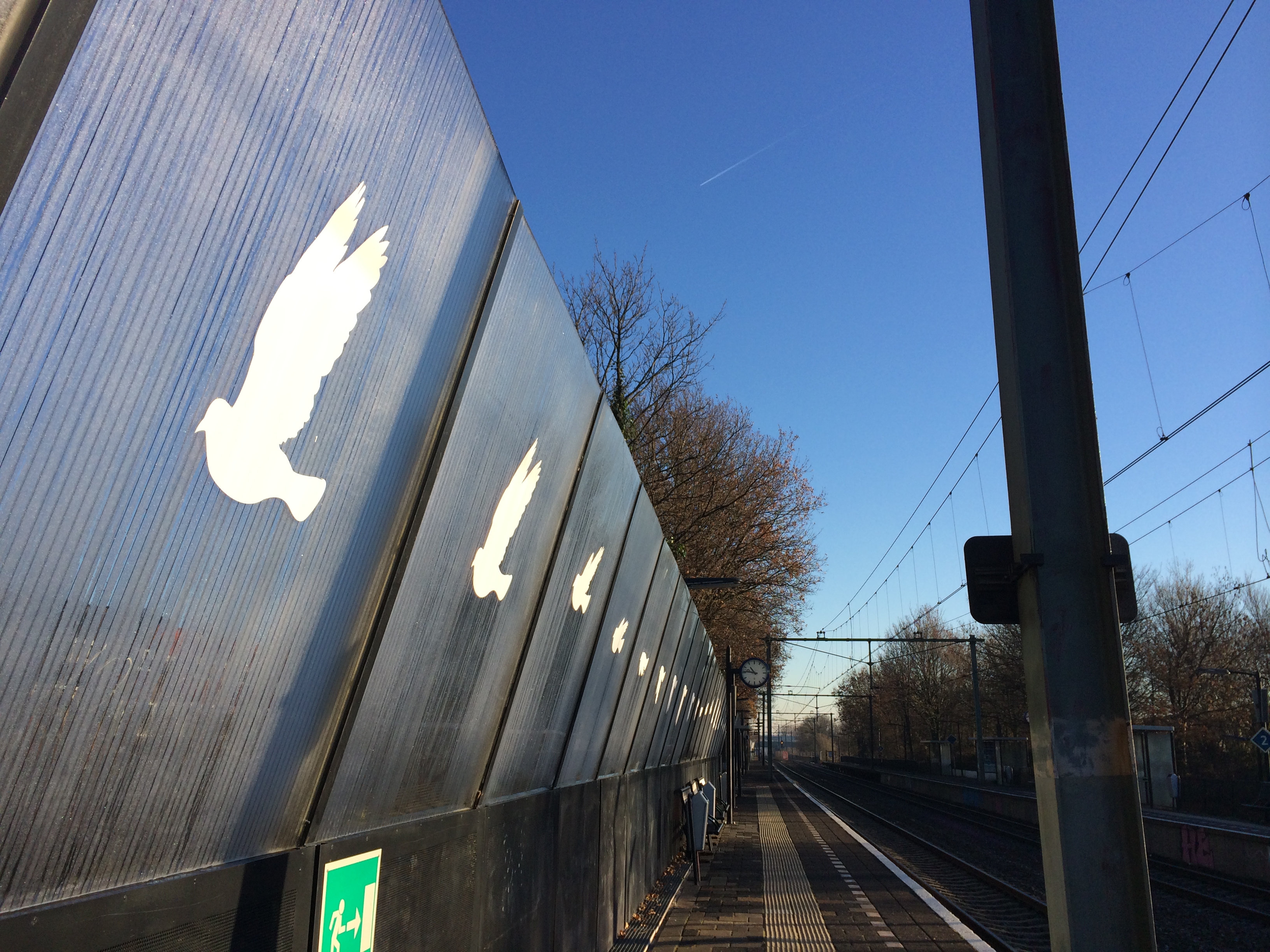
On Platform 2's noise barriers we see the artwork of Aukje Litjens, titled Vogelvlucht (Bird Flight). It is the flying motion of a white bird, presented in a progression of moments in time. When passengers are riding on the Intercity toward Rotterdam Central and passing through this station in speed (the Intercity doesn't stop here) , it may be possible to view this artwork as an animation. It is an example of viewing movement-through-time by experiencing movement-through-space.

Alternatively, I have also animated this artwork as a gif image, so it is now possible to view this animation without being on a train. There were 64 frames, each a different moment in the bird's flight. Note that I chose to perceive this work as one bird in flight through time presented in 64 moments, but it is also possible that these are 64 birds flying one after another, frozen in the same moment in time.Or it could be 32 birds frozen in 2 moments in time, or 2 birds in 32 moments or 8 birds in 8 moments etc. My intuitive perception is not more correct than any other possibilities.


--
At several different points on Platform 2, I have noticed leaves from nearby trees that grew through the crevices between the metal sheets of the noise barriers and made their way in.


Some of them are painted black while others remain green. Presumably the black leaves were painted over when they did the paint job on these metal parts. My initial speculation was that these leaves must have grown out at different points in time, some before the paint job and some after, and if we look at the painting schedules in the last year we might speculate when did each of these strands of leaves breach the barrier.

On second thought, the more likely possibility is that they only did the paint job on specific sections of the barriers in order to cover up some graffiti. Therefore some areas were painted and some were not.

To determine how likely each of these possibilities are (they could be both true), I would have to know the (re)-painting schedule of this station and also the growth schedule of these trees (eg knowing if they shed off dead leaves every year and grow everything anew). The painting information I could not find anywhere. As for the trees, I looked up these trees on the Bomenspotter Rotterdam app, and their species is Platanus x hispanica (also know as London Plane). These are, indeed, deciduous plants that loose all their leaves annually in winter and grow new ones in spring. All these leaves must be new, so I guess, then, that the paint job was done pretty recently in the past 2-4 months or so.  The leaves at these different spots on the platform are also roughly the same size, so they can't be too different in age. If we look into recent graffiti photos on the platform (like these) since the start of 2015 and identify which graffiti disappeared, we can probably figure out a timeline.

(and probably the first step in understanding any stretch of history is figuring out a timeline.)

Wednesday, 18 February 2015

Details: Stamp Machines and foot-printed map (Rotterdam Central Station)

Genpei Akasegawa (RIP) is a major inspiration for this blog.  In the mid 80s, he and several other Japanese architects/artists founded the Roadway Observation (RoJo) Society. This group produced tremendous fieldwork on observations and recordings of objects in the urban environments, objects that are often otherwise overlooked and ignored. I think the keyword is objects. The group was not primarily interested in contexts or in the broader social/cultural structures in which these objects existed. They simply took pleasure in admiring the details of the littlest things. Another way to describe their practice was 'Street Detailing'. 

I'm considering copying/echoing some of this group's methodologies in Rotterdam. I want to go hunt for Genpei Akasegawa's Thomassons, and I want to imitate Joji Hayashi's process of observing and typifying manhole covers. Before I do any of that, I thought I would do smaller spontaneous sessions to test the waters. The other night I tried to perform some detailing in Rotterdam Central Station. I'll talk about some objects I saw.

--


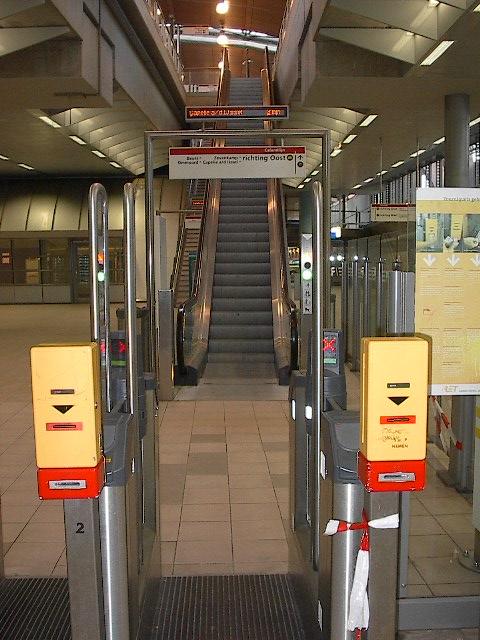
Two stempelautomaten, or 'stamp machines', are located outside the main Metro entrance in Rotterdam's Central Station. If you were living in the Netherlands before 2010 or so, you might remember that before the OV Chipkaart system was introduced, we used paper tickets for public transport, and the tickets had to be stamped by the stempelautomaat to be validated.  These yellow porters were made figures of authority. It was only with their approval that we were allowed to travel. It was kind of like going through customs at the boarder and needing to have your passport stamped by some bureaucrat. In truth, machines of this nature can be the perfect bureaucrat. 

Alas, the glory days of the yellow bureaucrats had passed, the paper tickets are now completely phased out (since July 2014), and the stamp machines are put out of work. If an innovative repurposing does not come into the picture soon, these machines are also practically put on death row. Currently they are tied up to metal poles in this busy transit spot for (shameful) public display of a medieval fashion, made examples of as bureaucratic figures from a bygone era who had become useless and obsolete. The two machines, numbered 15 and 16, are kept alive for now, as they're still each hooked into the power supply. I don't know when they will finally be disposed, but you can drop by and offer them some consolation before it's too late. Maybe even give them a hug. It really helps to get a hug when you're feeling useless, no?

--


These are the granite stairs at the bottom of the metro exit toward the bus stations in Rotterdam Central. At the lowest stair there is a strip of exposed cement. I'm not sure what's the functionality of this design but I've seen it on several of these granite stairs in Central Station. I would like to figure  out their original purpose soon.

Anyways I paid specific attention to the ones in the picture because they are imprinted with distinguishing patterns. These were probably footprints on wet cement. But they look like maps of some areas in Rotterdam's inner city (near the river). It is most likely a random pattern and this map-look is a beautiful illusion. But let's envision alternative scenarios where it is not:


What if... the inner city map is patternised and strategically used as decoration around the exits of public transport stations? 

What if... special shoes were issued for those (cement pourers) employed by the municipality, shoes that have the city map engraved onto their soles? And extending this shoe idea, what if your footprint actually prints something meaningful, and by simply walking about you are taking your city to every place you've been to? People had tried to put maps on shoes, but I haven't seen anyone try to put maps under them. Those would be the perfect shoes to express someone's emotional connection to a specific city. Imagine that wherever you walk to in the world, you are still always walking on the streets of your hometown...

Maps can be the best kind of summary of how a city physically IS. It is, then, extremely suitable to use this visual summary for symbolic purposes. Appropriating maps into usable symbols and patterns is, I think, a crucial design task for every city and even every city district.